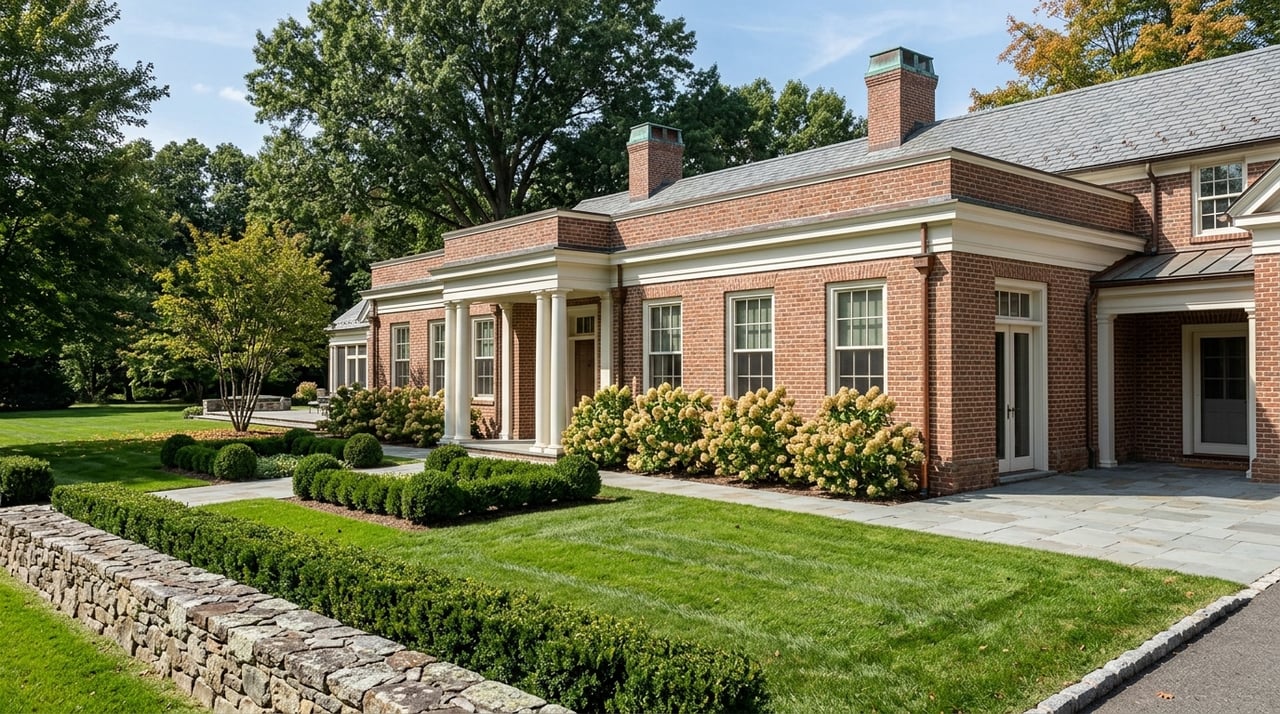
One Name, Seven Governments: What "Barrington" Actually Means for Your Price and Your Tax Bill
August 27, 2026
August 27, 2026
A client called me last spring holding two listings side by side. Both said "Barrington." Both were within two miles of each other. One had a tax bill nudging $23,000 a year. The other sat closer to $9,000. Same school district on paper. Same zip code on the envelope. Different county collecting the check, different fire department showing up if something goes wrong, and a tax rate that had nothing to do with which house had the nicer kitchen.
That's the thing nobody tells you when you start comparing "Barrington" to other northwest suburbs on a portal: it isn't one town. It's a label that covers at least seven separate incorporated villages, each with its own government, its own tax rate, and in some cases its own police department, loosely stitched together by shared roads, a shared school district, and a regional group that exists specifically because none of these places report to each other.
If you're shopping by median price alone, you're comparing a number that was never measuring one place to begin with.
The Village of Barrington, Barrington Hills, North Barrington, South Barrington, Lake Barrington, Tower Lakes, and Deer Park all sit inside or overlap the 60010 zip code. Add Port Barrington and you're at eight. Every one of these is its own municipal corporation with its own elected village board, its own village hall, and its own budget. They coordinate through the Barrington Area Council of Governments, a body founded in 1970 whose membership is literally the village presidents of Barrington, South Barrington, Barrington Hills, North Barrington, Lake Barrington, and Tower Lakes, plus the supervisors of Cuba and Barrington townships, covering a planning area of roughly 95 square miles.
That coordination exists precisely because these towns don't share a government. They share a name, a Metra line, and a school district. Barrington Community Unit School District 220 stretches across all four counties that touch this area: Cook, Lake, Kane, and McHenry. A family in North Barrington and a family in Barrington Hills can send their kids to the same high school while paying property taxes to two different counties, under two different assessors, on two entirely different calendars.
Here's the part that catches people off guard during a transaction, not before it. The Village of Barrington's own government page states plainly that property taxes are assessed and paid through either Lake or Cook County depending on where in town your home sits. Not depending on which village. Depending on where in the Village of Barrington itself, because the municipal boundary crosses a county line.
Barrington Hills takes that a step further. It touches Cook, Kane, Lake, and McHenry counties simultaneously, and its property tax bill blends five separate overlapping taxing districts. In tax year 2024, the effective rate there worked out to about 2.51% of market value, with the municipal government's own share accounting for roughly 14% of the total bill. On a median-value Barrington Hills home of around $913,600, that penciled out to a yearly tax bill near $22,923. Move a few streets over into Lake Barrington and the math changes again: a median effective rate closer to 2.26%, with the village's own data showing the median annual bill around $13,575, varying further depending on which zip code and which local school or park levy applies to that specific parcel.
Zoom out to the county level and the pattern holds. Cook County's broader median effective property tax rate runs around 2.14%. Lake County and McHenry County both tend to run higher, closer to 2.8% to 2.9% in recent countywide comparisons. So a Barrington-area home sitting in the Cook County portion of a village can carry a meaningfully different tax burden than an equivalent home a short drive away in the Lake County or McHenry County portion, even before you factor in which fire district, park district, or library district happens to overlap that parcel.
This is not a hypothetical for buyers. It's the kind of detail that shows up on the closing disclosure and surprises people who priced their monthly payment off a portal estimate that never asked which county their PIN was filed under.
Once you understand that "Barrington" is really seven markets wearing one name, the price discrepancies you'll find across different sites start to make sense instead of feeling like a glitch.
Take the Village of Barrington itself. One home-value index puts the typical home there at $541,801. A separate tally of actual closed sales over a recent three-month stretch put the median sale price at $595K, up only slightly year over year. Neither number is wrong. One is a broad estimate across the entire housing stock, the other is the median of whatever actually closed in that window, and in a market with a few dozen sales a month, the mix of homes that happened to sell can shift the median without shifting the market.
South Barrington shows the same pattern with a wider gap. Trailing twelve-month sale data puts the median there around $1.1 million. A separate December 2025 snapshot of homes listed for sale showed a median list price of $2.45 million. List price and sold price aren't the same measurement to begin with, but the size of that gap tells you something real: South Barrington's inventory ranges from homes in the low $200Ks up into the multi-million-dollar estate tier inside its gated communities, so whichever slice of that range happens to be active or closing in a given month will swing the headline number hard.
Barrington Hills is the clearest example of how thin the sales sample can get. Its home-value index sits at $817,893, but in July 2026 the actual median sold price came in at $1,925,000, based on just 26 closed sales that month, down from 40 the year before. With that few transactions, one or two large estate sales can pull the median far above what a broad index of the whole housing stock would suggest. North Barrington told a similar story in May 2026, with a reported median listing price of $1.5 million.
None of these numbers are lying to you. They're each measuring something slightly different, in a place where "the market" is really six or seven smaller markets with very different inventory mixes.
Fire protection is one of those things people assume comes bundled with the address until it doesn't. Barrington Hills, because of how its boundary weaves across multiple counties and township lines, is served by five separate fire districts rather than one. Which department responds to your home, and what that district charges through your tax bill, depends on exactly where your parcel sits inside the village, not on the fact that your mailing address says Barrington Hills.
It's a small detail, but it's the same pattern showing up again. The name on the mailbox and the government actually serving that address are two different questions, and in this part of McHenry and Cook and Lake County, you have to ask both.
If you're cross-shopping Barrington against Crystal Lake, Cary, or Algonquin, don't stop at the median price you find on a search. Ask which of the seven villages a specific listing actually sits in, which county collects the tax bill, and which fire, school, and park districts overlap that parcel. Two homes marketed under the same "Barrington" name can carry different tax rates, different assessors, and different appeal deadlines, and that difference will show up in your monthly payment long after the excitement of the listing photos has worn off.
This is also why I pull the actual PIN and tax history for any Barrington-area home before a client gets attached to it. The village name tells you almost nothing on its own. The parcel tells you everything.
If a listing just says "Barrington," how do I find out which village it's actually in? Ask for the parcel identification number and pull it against the county assessor's map. The mailing address alone won't tell you, since several of these villages share the same zip code.
Do all seven villages send kids to the same schools? Most of the area falls under Barrington Community Unit School District 220, which spans all four counties, but boundaries do shift, so it's worth confirming for a specific address rather than assuming based on the village name.
Does being in Cook County versus Lake County change anything besides the tax bill? It can affect which assessor's office you deal with for appeals, which treasurer's office collects payment, and which county's reassessment calendar applies to your notices. Those calendars don't always line up.
If you're weighing a move into the Barrington area, or trying to make sense of why two homes with the same name on the sign carry two very different numbers on the tax bill, I'd rather walk you through the actual parcel than let a median price make the decision for you. Reach out to Sells The Burbs and let's connect.
August 27, 2026
August 20, 2026
August 13, 2026
August 6, 2026
July 23, 2026

July 16, 2026
July 16, 2026
July 16, 2026
July 16, 2026
Work with someone who knows McHenry County beyond the listings. Melanie brings a thoughtful, steady approach to every step, helping buyers and sellers feel informed, comfortable, and connected to what comes next. Around here, real estate is less about the transaction and more about finding the right fit for your next chapter.
Sells The Burbs | Melanie Enriquez
230 W Virginia St Crystal Lake IL 60014