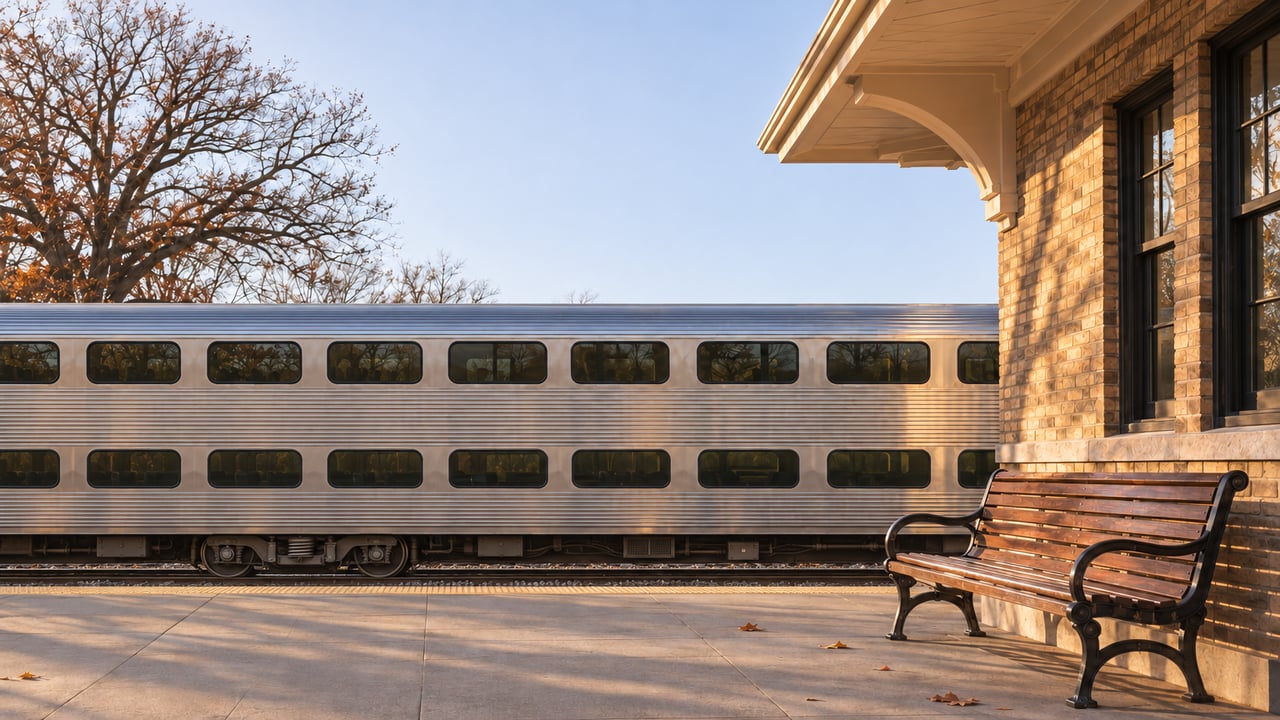
How the Metra Schedule Shapes the Price Gap Between Woodstock and Crystal Lake
November 19, 2026
November 19, 2026
Over the 12 months through September 2026, the median detached home in Woodstock sold for $385,000. In Crystal Lake, one stop down the Union Pacific Northwest line, it sold for $414,950. That gap of about $30,000 matches up with the train schedule more closely than with anything else that separates the two towns. The gap is also shrinking, even though Woodstock still has about half as many weekday trains as Crystal Lake.
If you're choosing between these two towns and someone in your household will ride Metra into Chicago, the price difference and the schedule difference are really one question. What follows is how I read both.
One month of sales in a town this size can swing hard, and Midwest Real Estate Data says so on its own reports. In September 2026, for example, the Woodstock detached median was $386,000 and Crystal Lake's was $392,000, almost a tie. A full year of sales is a steadier basis for the comparison. These are MRED's trailing 12-month figures for detached single-family homes through September 2026, from the Woodstock and Crystal Lake Local Market Updates, with data current as of October 14, 2026.
| Detached homes, 12 months through Sept. 2026 | Woodstock | Crystal Lake |
|---|---|---|
| Median sales price | $385,000 | $414,950 |
| Change from prior 12 months | +3.7% | +1.1% |
| Closed sales | 304 | 510 |
| New listings | 438 | 698 |
| Average market time | 46 days | 36 days |
| Percent of original list price received | 98.3% | 99.4% |
Over that year, a Woodstock home took about 10 more days to sell than a Crystal Lake home and closed a little further below its original asking price. On a $385,000 home, the 1.1-point difference in list price received comes to roughly $4,000. Taken together, the lower price, the longer market time and the slightly bigger discount from list show a market charging a modest markdown on Woodstock homes. The Metra timetable lines up with that markdown.
My Woodstock and Crystal Lake pages cover each town's everyday appeal. The train comparison is on Metra's current UP-NW timetable, generated November 13, 2026.
On a weekday, 14 inbound trains leave Woodstock for Ogilvie. Seven leave in the morning, at 5:43, 6:13, 6:43, 7:13, 8:03, 9:33 and 10:33 a.m. The other seven leave in the afternoon and evening, at 1:33, 3:33, 4:33, 6:33, 7:33, 9:33 and 11:33 p.m. Those are the trains that start in Harvard and pick up in Woodstock on the way.
At Crystal Lake station, many trains start the run themselves. By my count of the same timetable, about 27 weekday inbound trains depart from the downtown station, starting at 4:15 a.m. Crystal Lake also has a second station, Pingree Road, with about 30. That's roughly twice Woodstock's weekday service.
In daily life, the gap shows up in a few ways. Between 8:03 and 9:33 a.m., Woodstock has no inbound train, so anyone who misses the 8:03 waits an hour and a half. A Crystal Lake rider in the same spot has more choices. The pattern holds on weekends too. On Saturdays, Woodstock has 10 trains each way and Crystal Lake has 15. On Sundays, Woodstock has 7 inbound and 8 outbound, and Crystal Lake has 9 and 11.
Parking is set up differently as well. Crystal Lake runs the lot at its downtown station and sells a prepaid commuter permit for $30 a month. Metra operates Pingree Road, where the city lists daily parking at $1.50. The Woodstock station page lists 451 daily-only spaces, with Woodstock Police as the parking contact.
For a buyer who works from home three days a week, Woodstock's 14 trains may be plenty, and the $30,000 is just savings. For a buyer who works irregular hours downtown five days a week, the extra trains are what the higher price buys. The gap in the table matches the gap in the timetable.
One year earlier, in the 12 months through September 2025, Woodstock's detached median was $371,123 and Crystal Lake's was $410,500. That's a gap of about $39,400. A year later it was about $30,000. About $9,000 of the discount went away in a single year, and today's timetable still gives Woodstock about half of Crystal Lake's weekday trains.
Activity points the same way. Woodstock closed 304 detached sales over the past 12 months, up 16.0% from the year before, and new listings rose 12.3%. Crystal Lake's sales rose 8.1% and its new listings 5.1%. More homes are changing hands in Woodstock, and prices there are climbing faster on a bigger base of sales.
The attached market moved even more. Over the same 12 months, Woodstock's median attached single-family home sold for $260,750, up 15.9%. Crystal Lake's sold for $300,000, up 6.8%. For a first-time buyer looking at attached homes, Woodstock's head start in price shrank much faster than it did for single-family homes.
Here's my read. Many of the buyers who keep raising Woodstock's prices aren't pricing in a daily train ride the way commuters did a few years ago. When a household rides the train two days a week instead of five, the timetable counts for less and the price difference counts for more. That's a judgment, not something the data proves. But a discount that shrinks while the schedule is still this thin is what you'd expect to see if fewer buyers are paying for frequent service.
Metra has a project that could change the train side of this comparison. The Woodstock Layover Yard project would move train storage and maintenance from the existing Crystal Lake and Barrington yards to an expanded yard in Woodstock, to support more UP-NW service. Metra's March 2025 open-house handout describes seven storage tracks holding 14 trains. It says the added capacity could support up to 21 more weekday trips.
That handout also lays out a timeline. Final design and land acquisition run from 2026 through 2028, and construction runs from 2029 through 2031, all depending on funding. In other words, it's a plan for the next decade. A buyer closing this winter will live with today's 14 Woodstock trains for years. If the project is built, it would change Woodstock's side of the comparison more than anything in the sales data.
A buyer weighing the two towns has two separate calls to make. One is how much the current schedule is worth to your household right now. The other is how much weight to give a planned yard whose construction dates are years out and depend on funding. Over the last year, Woodstock buyers paid more with the schedule as thin as it is.
These figures turn into a decision once you hold them up against your own calendar.
If someone in the household catches a train before 6 a.m. or comes home late on a set schedule, compare the specific trains you'd ride from each station before comparing listings. Woodstock's 5:43, 6:13, 6:43 and 7:13 departures may be all you need, or the hour-and-a-half wait after 8:03 may rule it out.
If the household rides a couple of days a week, the past year's numbers favor taking the discount seriously. A Woodstock home also gives you a little more room to negotiate, since sellers there received 98.3% of original list price on average over 12 months, compared with 99.4% in Crystal Lake.
If you're looking at an older home near the Square in Woodstock, renovation rules belong in your budget too. I covered those in what the Woodstock Square Historic District requires before you renovate. If Crystal Lake's appeal for you is the water, who can put a boat on Crystal Lake is a separate question from what the train schedule pays for.
If you already own in either town and are deciding when to sell, the shrinking gap matters on your side too. Woodstock sellers have been closing some of the distance with their neighbors one stop down the line. A home valuation will show where your home falls in that range.
If you're weighing Woodstock against Crystal Lake and want to go over the trains, the trade-offs and the homes that fit your week, I'd love to help you work through it. Reach out through Sells The Burbs and let's connect.
November 19, 2026

November 12, 2026
November 5, 2026

October 29, 2026
October 22, 2026
October 22, 2026
October 15, 2026
October 8, 2026

October 1, 2026
Work with someone who knows McHenry County beyond the listings. Melanie brings a thoughtful, steady approach to every step, helping buyers and sellers feel informed, comfortable, and connected to what comes next. Around here, real estate is less about the transaction and more about finding the right fit for your next chapter.
Sells The Burbs | Melanie Enriquez
230 W Virginia St Crystal Lake IL 60014